
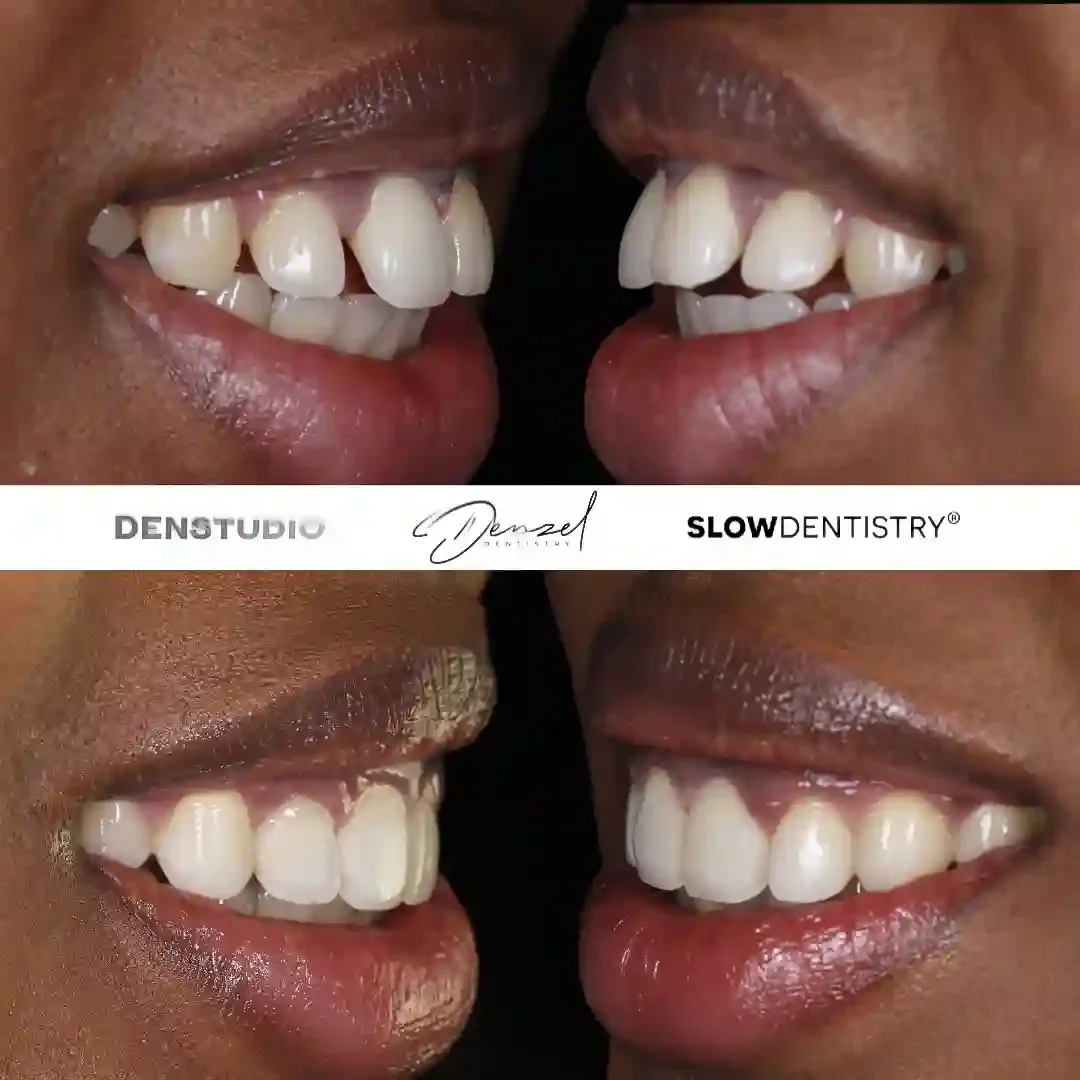
Invisalign for Overbite and Underbite
Correcting bite problems is essential not only for appearance but also for oral health. An overbite occurs when the upper teeth excessively overlap the lower teeth, while an underbite is when the lower teeth protrude past the upper teeth. Both conditions can lead to issues such as tooth wear, jaw pain, and difficulty chewing.
Invisalign has become a leading solution for adults and teenagers seeking discreet orthodontic treatment. Unlike traditional braces, Invisalign uses a series of clear, removable aligners to gradually shift teeth into their ideal positions. At London Dental Centre, our cosmetic dentists in London combine Invisalign with other cosmetic treatments like veneers, porcelain veneers, and composite bonding to enhance both function and aesthetics.
This guide explores how Invisalign works for overbite and underbite correction, what to expect during treatment, and tips for maintaining comfort and oral health.
Understanding Overbite and Underbite
An overbite occurs when the upper front teeth extend significantly over the lower front teeth. Mild overbites are common, but severe cases can cause:
Excessive wear on lower teeth
Jaw discomfort or temporomandibular joint (TMJ) issues
Speech difficulties
A less balanced facial profile
An underbite is the opposite, with the lower teeth extending beyond the upper teeth. Severe underbites can lead to:
Difficulty biting or chewing
Increased risk of tooth damage
Strain on jaw muscles
Changes in facial appearance
Early diagnosis and treatment are key to preventing long-term damage and improving dental function.
How Invisalign Corrects Overbite and Underbite
Invisalign corrects bite issues using a precise sequence of aligners custom-designed for each patient.
1. Customised Treatment Planning
Your cosmetic dentist in London will take digital scans of your teeth to create a 3D model. Using advanced software, we plan how teeth will gradually move to correct your overbite or underbite.
2. Sequential Aligners
Patients receive a series of clear aligners, usually changing them every 1–2 weeks. Each aligner applies gentle pressure to specific teeth, guiding them into proper alignment.
3. Attachments for Complex Movements
Small, tooth-coloured attachments may be placed on teeth to provide extra grip and precise control for difficult movements, especially in severe overbites or underbites.
4. Optional Interproximal Reduction (IPR)
In some cases, minor reshaping of teeth may be needed to create space and facilitate movement, enhancing the effectiveness of Invisalign treatment.
5. Regular Check-ups
Patients visit London Dental Centre periodically to monitor progress and adjust treatment as necessary, ensuring optimal results.
Benefits of Using Invisalign for Bite Correction
Discreet Appearance
Clear aligners are virtually invisible, making them ideal for adults and professionals.
Comfortable Treatment
Without wires or brackets, Invisalign reduces irritation to gums and cheeks.
Improved Oral Hygiene
Aligners are removable, allowing patients to brush and floss normally.
Predictable Results
Advanced digital planning ensures each stage of tooth movement is carefully controlled.
Cosmetic Enhancement
In addition to functional improvements, Invisalign can be combined with veneers, porcelain veneers, or composite bonding for a complete smile makeover.
Managing Comfort During Treatment
Some discomfort is normal when starting new aligners or during significant tooth movements:
Mild pressure or soreness typically lasts 1–3 days
Over-the-counter pain relief, soft foods, and warm saltwater rinses can help
Use orthodontic wax to prevent irritation from attachments
Maintain consistent aligner wear (20–22 hours per day) for faster adaptation
Aftercare for Long-Term Success
Retainers: After treatment, wearing retainers prevents teeth from shifting back.
Routine dental care: Regular check-ups and hygiene appointments maintain oral health.
Monitor bite and function: Report any discomfort or misalignment to your dentist promptly.
FAQs: Invisalign for Overbite and Underbite
Can Invisalign fix severe overbites or underbites?
Yes, Invisalign can treat mild to moderate bite issues effectively. Severe cases may require additional treatments, which your dentist will discuss during consultation.
How long does treatment take?
Treatment typically ranges from 12 to 24 months, depending on complexity.
Are aligners uncomfortable?
Some pressure is normal, but most patients find aligners more comfortable than traditional braces.
Can I eat with Invisalign?
Aligners should be removed during meals. Brush your teeth before reinserting them.
Is Invisalign suitable for adults?
Absolutely. Invisalign is ideal for adults seeking discreet orthodontic treatment while maintaining professional appearance.
Why Choose London Dental Centre for Invisalign
With over 15 years of experience in Islington, London Dental Centre provides:
Expert cosmetic dentists in London experienced in bite correction
Advanced digital treatment planning
Combination of Invisalign with veneers, porcelain veneers, and composite bonding
Supportive environment to manage comfort and ensure long-term results
Book Your Invisalign Consultation
Correcting an overbite or underbite improves oral health, bite function, and smile aesthetics. Schedule a consultation at London Dental Centre to learn how Invisalign can help you achieve a comfortable, confident smile.
Call or book online today to start your personalised Invisalign journey with experienced cosmetic dentists in London.